The New Framework to Run Modern Workplaces
PlaceOps, or Workplace Operations, is a strategic approach that aligns Facilities, HR, and IT teams to run a more effective workplace.

Workplace management, as it exists today, is fundamentally broken.
Space usage is increasingly difficult to predict, employee expectations have dramatically increased, and buildings generate more data than ever before. Workplace teams operate more tools, more complexity, and more chaos than at any moment in history.
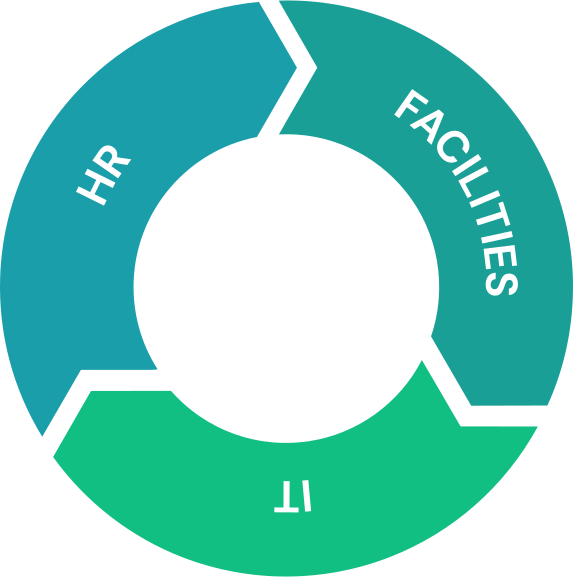
Facilities
owns the space.
HR
owns the people.
IT
owns the tech.
But no one truly
owns the workplace.
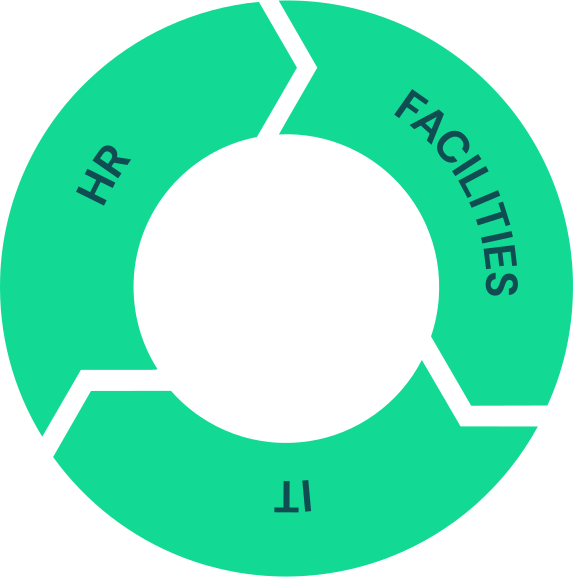
Instead of siloed tools and disconnected teams, PlaceOps provides a unified way to run the modern workplace.
PlaceOps is the framework for orchestrating people, space, and technology as one living system.
It unites every component of the workplace into a single operational layer that delivers efficiency for operators and seamless experiences for everyone inside. Instead of siloed tools and disconnected teams, PlaceOps provides a unified way to run the modern workplace.
Just as DevOps transformed software delivery and RevOps unified revenue operations, PlaceOps transforms how physical environments are operated, optimized, and experienced.
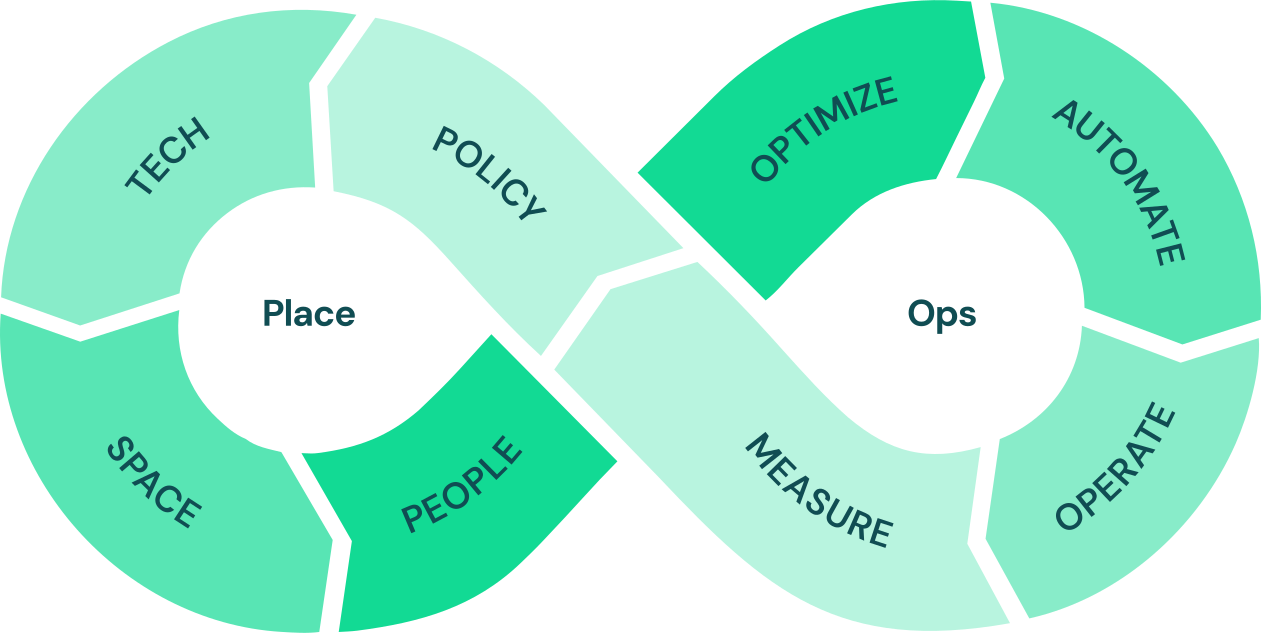
PlaceOps Layer Model
The PlaceOps Layer Model defines how modern workplaces should be operated: not as separate systems and teams, but as a unified, intelligent ecosystem. Each layer builds on the others to deliver seamless experiences, efficient operations, and data-driven decision-making.
Governance & Strategy
Where the workplace becomes a strategic function. This layer defines ownership, accountability, decision rights, investment priorities, and the long-term vision guiding workplace operations.
Governance & Strategy
Intelligence
The brain of the workplace. This is where data converges, insight is generated, and systems of action are triggered.
Intelligence
Systems & Integration
Where technologies finally speak the same language. This layer connects IWMS, booking, visitor management, access control, sensors, and ticketing systems to eliminate silos and reduce manual work.
Systems & Integration
Operational Workflows
Where workplace activity is governed by consistent processes. It ensures space planning, seat assignment, visitor management, access control, safety roles, and service coordination are executed through defined, repeatable workflows.
Operational Workflows
Experience
Where people interact with the workplace. It includes booking space, navigating the office, accessing services, and requesting support, reflecting how well the underlying layers work together.
Experience
Frequently Asked Questions
What is PlaceOps?
PlaceOps is an operational approach to managing workplaces based on how people actually use them. It
connects space, data, and processes to ensure offices support business needs, employee experience, and
efficiency over time.
Who is PlaceOps for?
PlaceOps is built for Facilities, Real Estate, HR, and IT leaders who want to manage the workplace through a unified lens. It helps cross-functional teams align around a shared operating framework to plan, manage, and continuously improve the workplace as one cohesive system.
Why do organizations need PlaceOps today?
Workplaces have become more complex. Hybrid work, fluctuating occupancy, and rising real estate costs have made traditional office management less effective. PlaceOps provides a structured approach to aligning space, technology, and people so organizations can make informed decisions, reduce waste, and ensure offices support how teams work today.
How is PlaceOps different from traditional workplace or facilities management?
Traditional workplace management is reactive and fragmented, focused on maintaining buildings and responding to issues. PlaceOps treats the workplace as an operating system, aligning stakeholders, data, and workflows to proactively manage performance and experience.
How do you implement PlaceOps in an organization?
Implementing PlaceOps starts by identifying key stakeholders across Facilities, Real Estate, HR, and IT, then establishing a regular cadence of communication to align on workplace priorities and decisions. It requires defining a shared source of truth by agreeing on the core data systems and metrics everyone will rely on, and setting common workplace objectives that connect space, people, and technology under one unified strategy.
What is the purpose of this platform?
Our goal is to create a community of like-minded individuals who care about improving how workplaces are run. We welcome anyone involved in operating office spaces to share ideas, learn from others, and help shape better workplace experiences.
Where can I learn more about PlaceOps?
You can learn more about PlaceOps principles and companies putting them into action in our free
monthly newsletter.